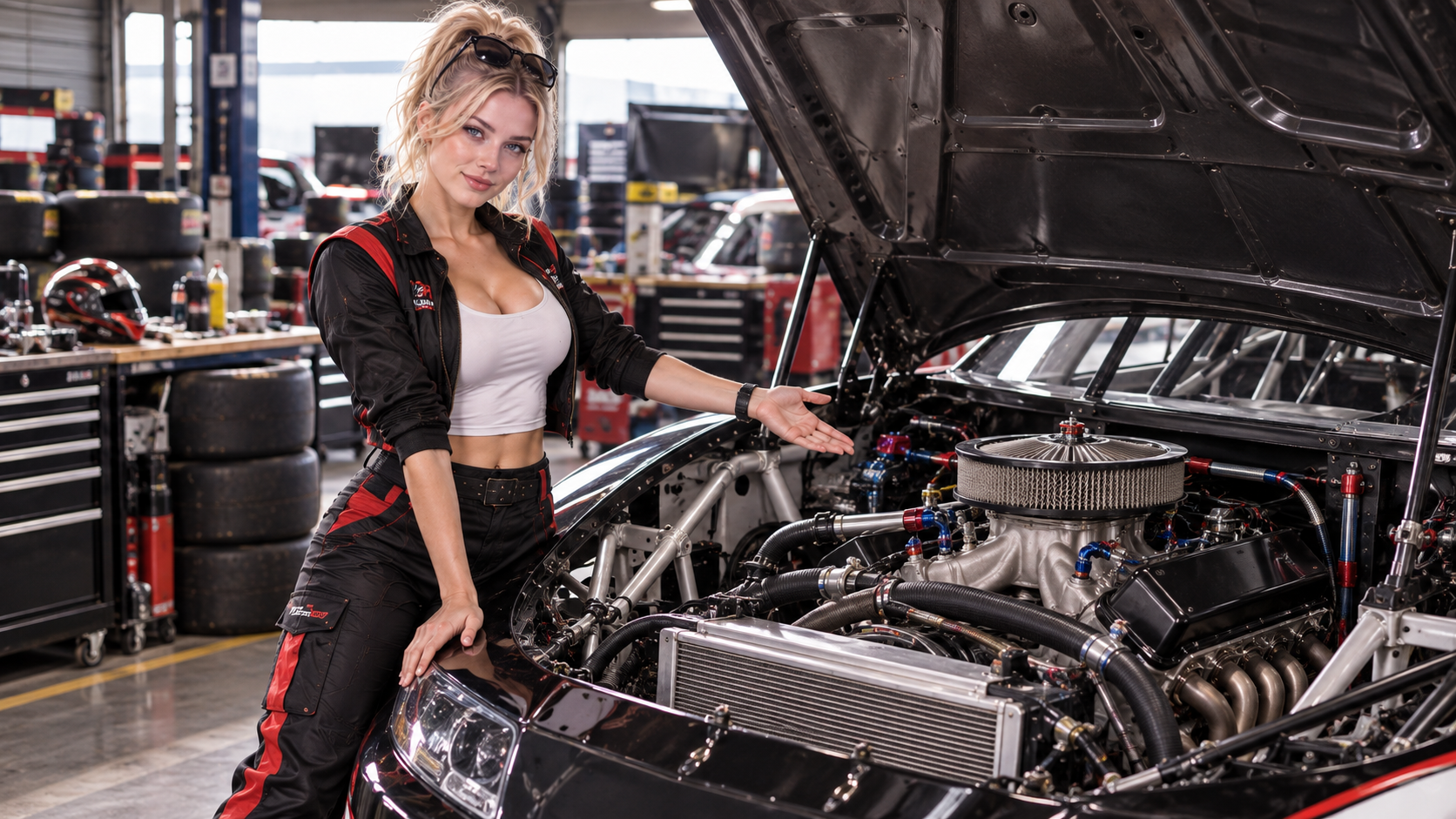
A NASCAR Cup Series engine is interesting precisely because it is not a science-fiction machine. It uses a familiar four-stroke V8 layout, then pushes that architecture through careful optimization, strict rules and the brutal duty cycle of racing.
So, what exactly is a NASCAR V8?
At its most basic, it is an eight-cylinder, naturally aspirated racing engine. Current Cup Series specification material lists 358 cubic inches—about 5.8 liters—along with fuel injection and a dry-sump oil system. The exact power package can vary with track type and current regulations, so the useful starting point is the architecture rather than one headline number.
It is not a road-car engine with the badges removed. The block, heads, rotating assembly, induction and lubrication systems are built for sustained high load, controlled weight and repeatable performance. Manufacturers and engine builders develop their own programs inside NASCAR's rule set.
Why a V8?
A V8 gives engineers eight combustion chambers in a compact package. That helps concentrate displacement without making the engine as long as a comparable inline layout. It also carries a deep racing heritage, an established supply chain and a large body of accumulated knowledge.
Those are engineering advantages and sporting constraints at the same time. NASCAR rules define much of the playing field, while teams search for gains in airflow, combustion, friction, durability and calibration. The result is not simply “old technology”; it is a mature architecture optimized for a very specific job.
Air in, exhaust out
An engine is an air pump with a controlled chemical reaction in the middle. Air enters through the intake, fuel is metered into the system, the mixture fills a cylinder, combustion pushes the piston down, and the exhaust must leave quickly enough to make room for the next cycle.
As engine speed and power demand rise, every restriction matters. Intake shape, throttle response, cylinder-head flow, valve timing and exhaust tuning all influence how completely the cylinders fill and clear. More air can support more fuel and more useful work—but only if heat, knock, friction and mechanical stress remain under control.
Inside the engine
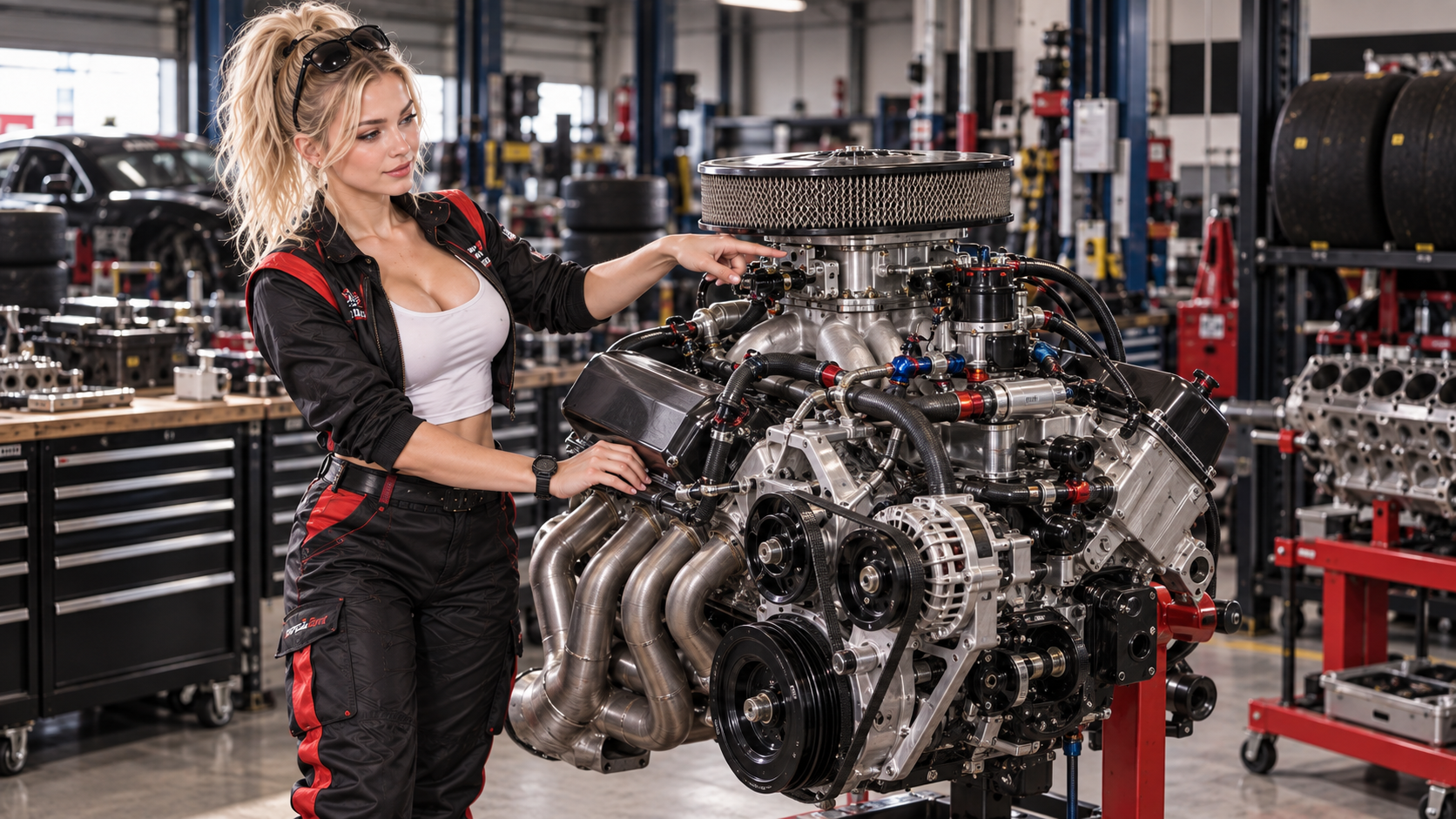
The intake system guides air toward the cylinders. The cylinder heads contain the ports, valves and combustion chambers. Pushrods and rocker arms transfer camshaft motion to the valves in an overhead-valve arrangement, while pistons move inside the cylinders and connect through rods to the crankshaft.
The crankshaft turns the pistons' reciprocating motion into rotation. At the other end of the process, exhaust headers collect the spent gases and guide them out of the engine. The image above is editorial and illustrative: it helps us see the relationships between systems, but it should not be treated as an exact cutaway or a complete representation of every current NASCAR component.
The four-stroke cycle
- Intake. The piston moves down while the intake valve opens, drawing air and fuel into the cylinder.
- Compression. The valves close and the piston moves upward, compressing the mixture.
- Power. Ignition starts combustion. Expanding gases push the piston down.
- Exhaust. The exhaust valve opens and the piston moves upward, pushing spent gases out.
One complete four-stroke cycle takes two crankshaft revolutions. Multiply that sequence across eight cylinders and repeat it at racing speed: the crankshaft receives a series of carefully timed pushes that become usable torque.
Why pushrods still work here
Overhead-valve, or pushrod, architecture remains relevant because packaging and rules matter. It can keep the valvetrain arrangement compact and benefits from decades of development. That does not mean every pushrod engine is automatically lighter, simpler or better than a modern overhead-cam design. It means the architecture can be exceptionally effective when optimized for its constraints.
That is a recurring engineering lesson: the best solution is not universal. It is the solution that performs reliably inside the space, rules, materials, operating range and budget that actually exist.
Torque versus horsepower
Torque is rotational force—the twisting effort at the crankshaft. Power describes how quickly work can be performed. In practical terms, torque gives the engine its shove, while rotational speed determines how quickly that shove can be delivered.
Try the Torque-Power Explorer to calculate a point or inspect how RPM connects torque and power. Its synthetic sample illustrates the relationship; it is not a measured NASCAR engine curve.
Making power without a turbo
A naturally aspirated racing engine has no turbocharger compressing the intake charge for it. It must earn its airflow through intake design, valve timing, cylinder-head flow, combustion efficiency and carefully tuned exhaust behavior. High volumetric efficiency means the cylinders fill effectively relative to their size.
Compression, calibration, friction reduction and engine speed all matter too. None is magic by itself. Power comes from the interaction between airflow, fuel, combustion and mechanical efficiency.
Cooling: getting rid of heat
Combustion creates useful pressure and a lot of unwanted heat. Coolant carries heat away from the engine, the radiator rejects it to the air, and the car's bodywork and airflow management help keep the thermal system working at speed. Oil also carries heat away from bearings and other loaded components.
Temperature management is performance management. Too much heat can change clearances, weaken materials, thin the oil and reduce the margin against failure. A fast engine that cannot control its heat is not a fast engine for long.
Lubrication: keeping it alive
Race lubrication has to protect bearings and moving surfaces while the engine sees sustained load, vibration and rapid changes in acceleration. A dry-sump system stores oil in a separate tank and uses scavenging pumps to manage oil around the engine, helping maintain supply and control aeration under demanding conditions.
Oil is not only a friction reducer. It is also part of the cooling and cleanliness strategy. Keeping the film intact between loaded surfaces is one of the quiet jobs that makes the loud parts possible.
Built for power and survival
A race engine does not merely need to make power on a dyno. It needs to survive the race: sustained load, heat, vibration, friction, component stress and countless combustion events. Reliability engineering is not separate from performance; it is what allows performance to be used repeatedly.
What does it feel like when it runs?
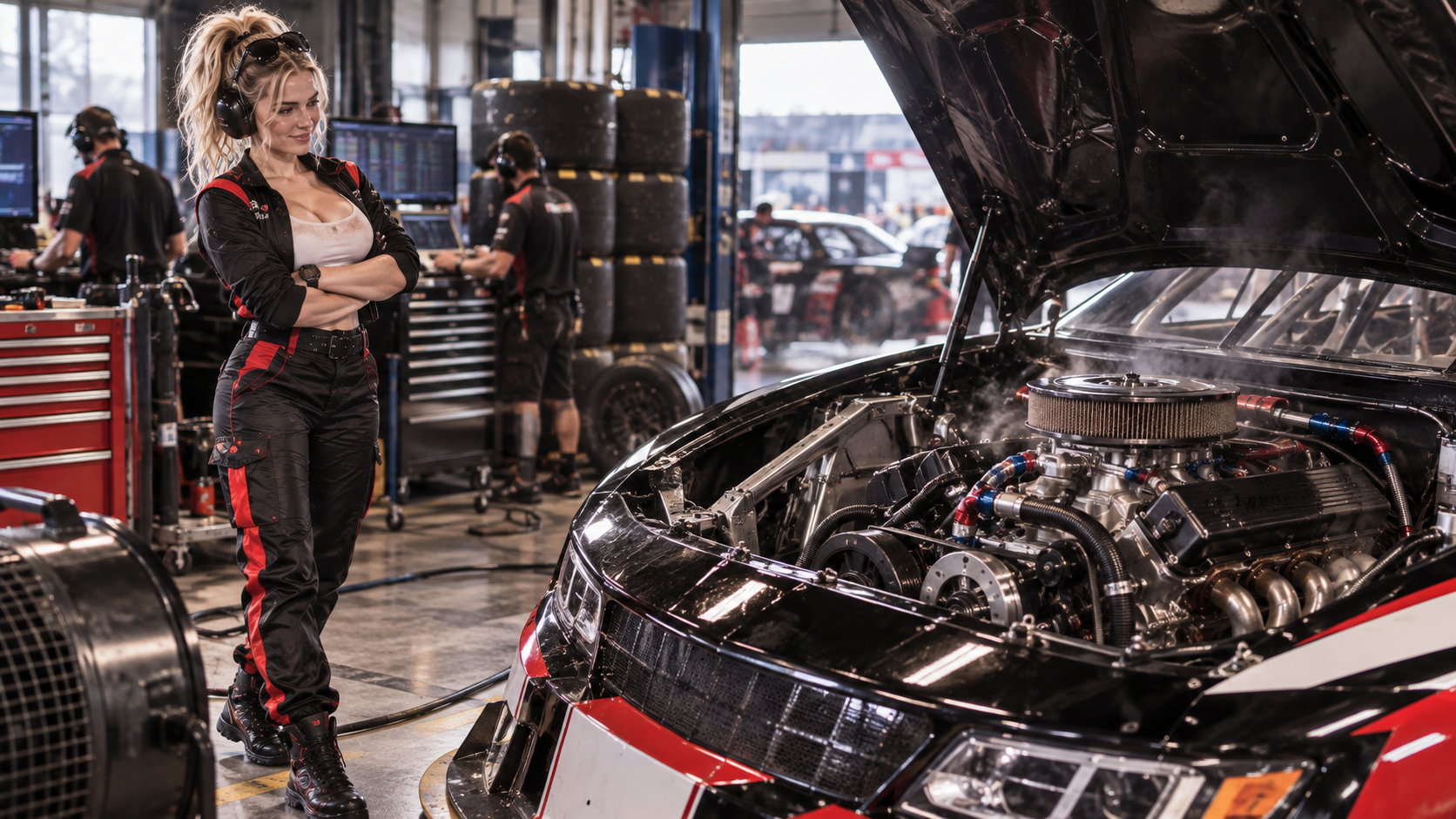
Near a running race engine, the experience is physical. There is vibration through the floor, an uneven pressure of exhaust pulses, mechanical noise, heat and a throttle response that feels immediate. Hearing protection is not decoration—race engines can produce hazardous sound levels, and safe distance matters around running machinery.
Why this engine is interesting
The lesson is not that the newest technology always wins. Performance comes from optimizing a machine for its constraints and purpose. NASCAR engines demonstrate what happens when a familiar architecture is refined inside a defined rule set until airflow, combustion, friction, heat and durability become one connected engineering problem.
Final thoughts
The next time a stock car fires up, do not just hear noise. Think about airflow, combustion, friction, heat, torque and thousands of components working together at racing speed.