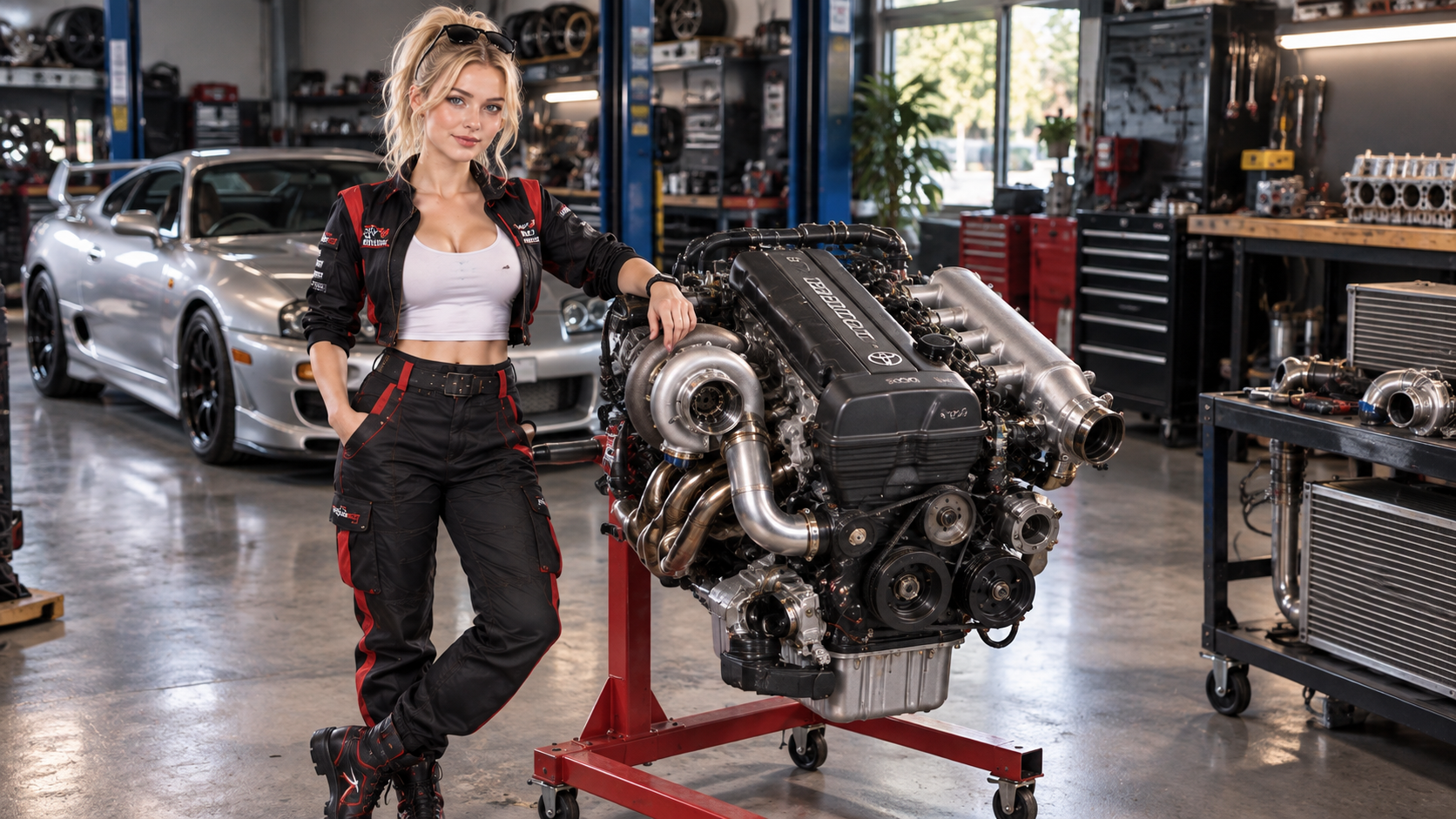
Some engines become famous because they are rare. Some become famous because they win races. The Toyota 2JZ-GTE took a different route: it became a legend because a well-engineered production engine gave an entire generation of enthusiasts something unusually valuable—room to learn, modify and keep asking for more.
That reputation is often reduced to a horsepower meme. The more interesting story is underneath. The 2JZ-GTE combined a 3.0-liter inline-six layout, twin turbochargers, a substantial factory architecture and the Toyota Supra Mk4 connection. Then the aftermarket spent decades exploring what that foundation could do.
Meet the 2JZ-GTE
The 2JZ belongs to Toyota's JZ family of six-cylinder engines. The GTE is the turbocharged, performance-oriented version; the 2JZ-GE is the naturally aspirated sibling. The engine is a 2,997 cc inline six with dual overhead camshafts and four valves per cylinder. In the A80 Supra, it arrived as part of the fourth-generation car introduced in 1993.
The Supra is the cultural anchor, but it was not the only Toyota or Lexus application associated with the engine family. The 2JZ-GTE also appeared in the Toyota Aristo in Japan. That wider context matters: this was not a race-only special. It was a production powerplant engineered to live in a road-car environment before enthusiasts turned it into a platform.
Quick specs
The numbers need context. Toyota's Japanese-market material lists 280 PS for the A80 2JZ-GTE, while Toyota's US historical material lists 320 hp and 315 lb-ft for the Supra Turbo. Market, model year and measurement conventions matter, so one figure should not be presented as universal.
Why the 2JZ is so strong
The cast-iron block is the headline feature, but it is not the whole explanation. An inline-six has natural mechanical smoothness because its reciprocating forces can be balanced well. That gives engineers a calm base for a turbocharged engine, while the long crankshaft and bearing loads still demand careful design and maintenance.
The 2JZ-GTE's factory architecture was built for a high-output road car, not for an internet claim about unlimited power. Its reputation comes from the combination of block rigidity, a robust bottom-end concept, a well-supported cylinder head and Toyota's conservative production calibration. That is factory engineering. The spectacular builds seen in drag racing or online videos add fuel system capacity, turbo hardware, cooling, engine management and often internal upgrades.
There is a crucial difference between a platform having tuning headroom and every untouched, thirty-year-old engine being indestructible. Age, oiling, cooling, detonation and previous modifications still decide whether a specific engine survives.
Engine close-up
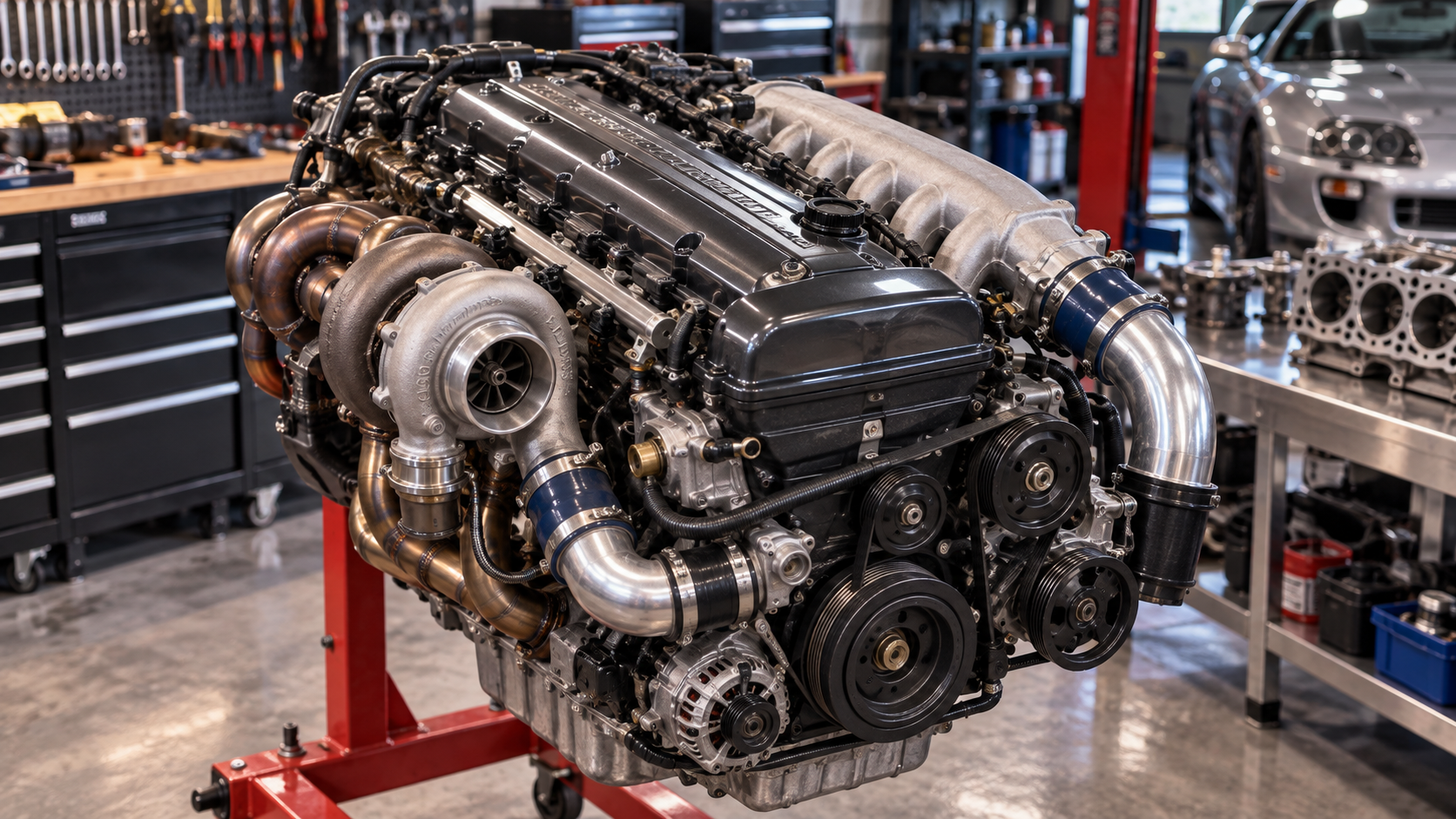
Look at the engine as a system rather than a pile of famous parts. The inline-six stretches the cylinders along one bank, while the intake and exhaust sides create the space for airflow, fuel delivery and turbo plumbing. On a real build, hoses, intercooler pipes, manifolds and turbo hardware may differ substantially from the original production configuration.
The original twin-turbo system
The 2JZ-GTE used two turbochargers in a sequential arrangement rather than simply asking two identical compressors to work in parallel all the time. At lower engine speed, the system prioritizes early response from the first turbo. As exhaust flow and engine speed rise, control hardware brings the second turbo into the air-production story.
That approach reflects a classic engineering compromise. A very large turbo can move a lot of air at high speed but may be difficult to accelerate at low speed. Smaller staged turbos can help the engine feel more responsive across a wider operating range, although the plumbing and control strategy become more complex.
Many later performance builds convert the system to a large single turbo. That can simplify the hot side and offer a larger compressor and turbine for a particular power target. It also changes the response, heat load, control requirements and the character of the car. A single turbo is not automatically better; it is a different optimization.
How much power can a 2JZ make?
This is where responsible explanations matter. Factory output is a specification. A lightly modified street engine is a different case. An upgraded turbo, fuel system and calibration are another. A heavily built engine with forged internals, serious cooling and motorsport maintenance is something else again.
There is no honest single number that describes what every 2JZ-GTE can reliably make. Achievable power depends on engine condition, fuel quality, boost, turbo selection, fuel delivery, ignition control, cooling, oiling, internal components, intended use and maintenance. A dyno number without that context tells only a small part of the story.
When a famous build makes four-digit power, it is usually a complete system: upgraded fuel supply, engine management, turbo hardware, exhaust, intercooling, drivetrain and often a built engine. That is evidence of the platform's tuning potential, not proof that every stock long block should be operated at that level.
A headline power figure also leaves out where that output occurs. Use the Torque-Power Explorer to connect torque, power and RPM in supplied samples. The educational sample represents no 2JZ build and predicts no safe or achievable output.
The Supra connection
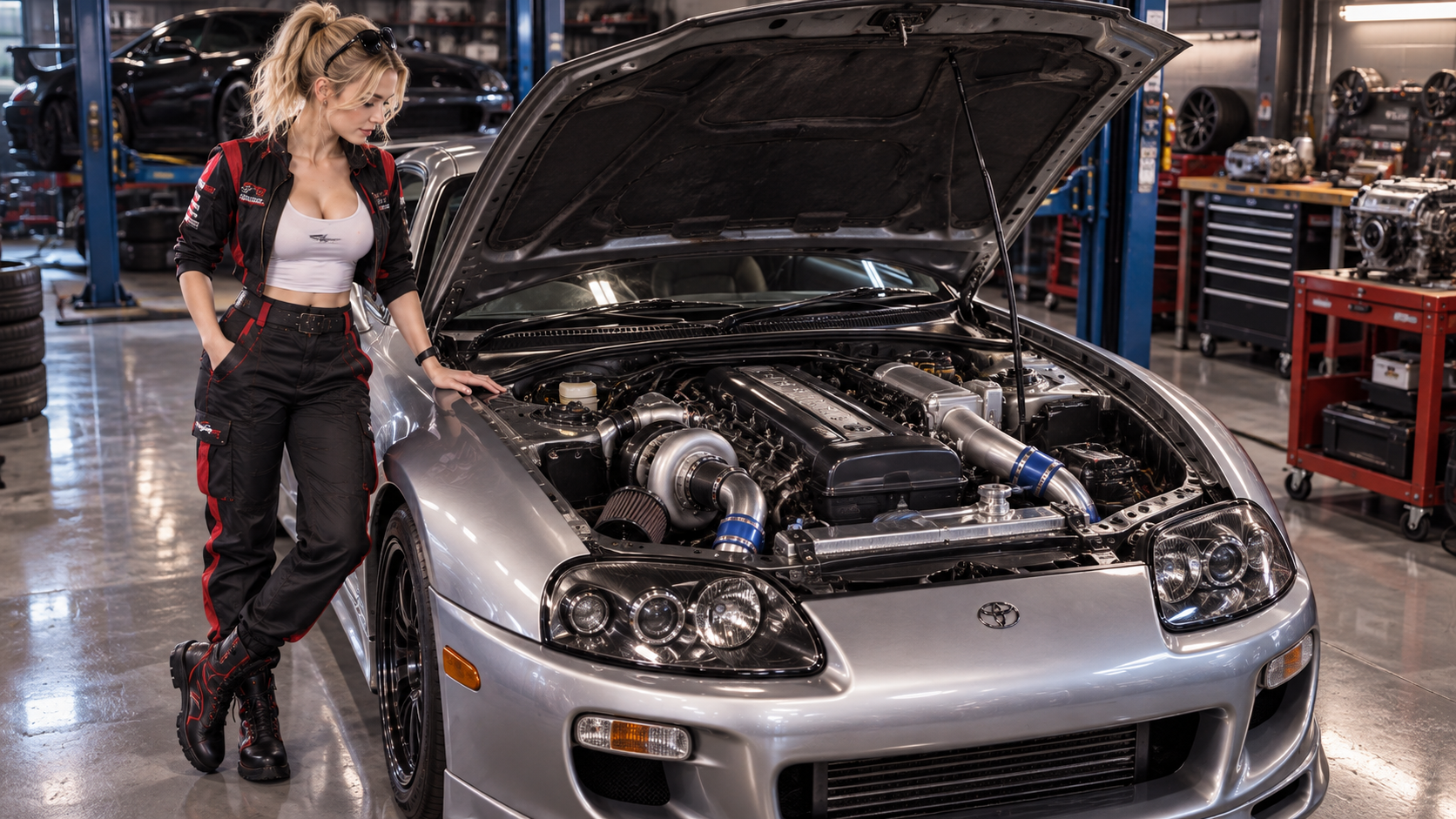
The A80 Supra gave the 2JZ-GTE its most recognizable home. Toyota paired the engine with a sophisticated chassis, a six-speed manual option for turbo models and the kind of performance that made the car feel expensive without wearing an exotic badge. The engine and car became a package in the imagination of enthusiasts.
Then tuning culture did what it does best. Drag racing, track builds, engine swaps, forums, parts catalogs and eventually popular culture gave the 2JZ a second life. The Supra's screen presence helped, but it did not create the engineering. The culture amplified a machine that already gave people a credible place to start.
2JZ-GE vs 2JZ-GTE
2JZ-GE
- Aspiration
- Naturally aspirated production variant.
- Role
- Road-car performance without the GTE's factory turbo system.
- Tuning implication
- Turbocharging requires a complete system approach; adding a turbo does not automatically turn a GE into a factory-equivalent GTE.
2JZ-GTE
- Aspiration
- Sequential twin-turbocharged and intercooled.
- Role
- High-performance variant associated especially with the A80 Supra Turbo.
- Tuning implication
- Starts with factory forced-induction hardware and a different specification package, but still needs age-aware inspection and careful calibration.
Both engines share the broad 2JZ family architecture, but they are not interchangeable labels. Specifications changed by market and application, and a conversion involves fuel, ignition, cooling, exhaust, control and mechanical decisions. The badge alone does not determine the result.
Common weaknesses: the reality check
Today, every 2JZ-GTE is an old engine. Rubber seals, hoses, gaskets, wiring connectors, sensors and cooling-system parts age even when the core architecture remains healthy. Turbochargers can suffer from wear, oil leaks or heat damage. Previous owners may have changed boost control, fueling or engine management without leaving a reliable record.
Parts availability and cost are also part of the engineering decision. Genuine components, good used parts and complete, honestly documented builds are no longer the cheap shortcut they once seemed. A compression or leak-down check, oil-pressure verification, cooling-system inspection and careful look at modifications can be more valuable than a dramatic dyno claim.
Legendary durability means an engine has earned a strong reputation under the right conditions. It does not mean it is immune to detonation, overheating, poor lubrication or neglect.
Why people still build them
The 2JZ remains desirable because the ecosystem is unusually deep. There is a large body of tuning knowledge, a wide aftermarket, a recognizable engine layout and a community that has spent decades documenting what works and what fails. That lowers the knowledge barrier for a serious project, even if it does not make the project inexpensive.
It is also a compelling swap candidate because an inline-six turbo engine can bring a strong identity to cars far beyond the original Supra. But the same advice applies: choose the whole package—mounting, cooling, wiring, fuel, transmission, driveshaft, brakes and legal requirements—not only the engine pictured in the listing.
Final thoughts
Thirty years later, the Toyota 2JZ-GTE is still interesting because it rewards curiosity. Study the factory engine, then study the modified one. Ask where the heat goes, how the fuel gets there, why the turbo system is controlled, and which parts of a famous build are actually doing the work.
That is the better version of the legend: not an unlimited-engine myth, but a machine that gives careful engineers a strong place to begin.