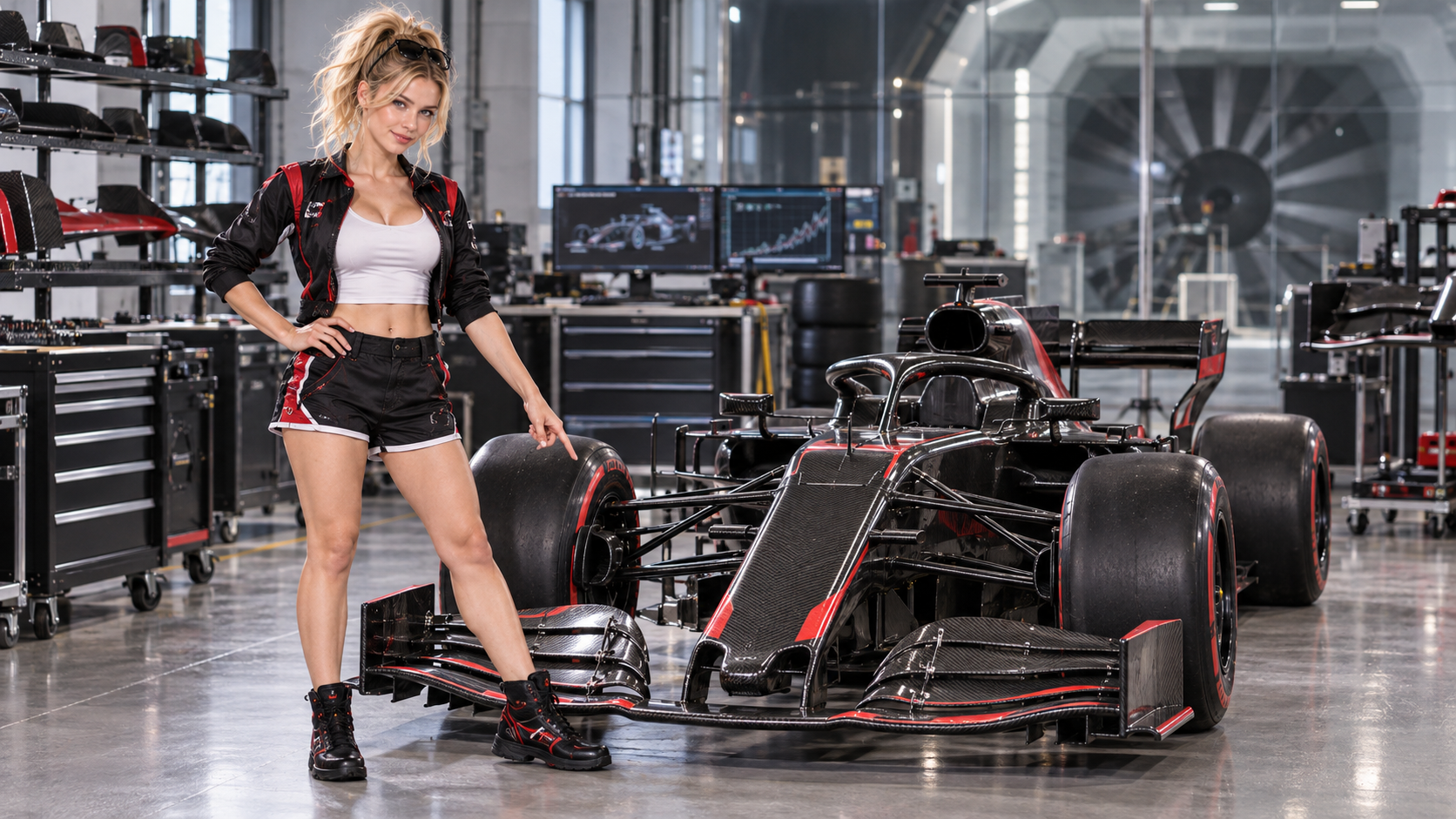
The apparent contradiction is simple to state: an airplane is designed to produce lift, while a Formula 1 car is designed to produce a large aerodynamic force toward the circuit. That load can give the tires more normal force to work with, increasing cornering, braking and acceleration potential without adding the same amount of static mass.
But where does all that downforce come from? Not from one magic wing. It comes from pressure fields, airflow that is accelerated and turned, underfloor geometry, wings, bodywork, vehicle attitude and wake management working as one system.
The short answer
A modern Formula-style car generates aerodynamic load through its complete shape, especially the underfloor, diffuser, front wing, rear wing and surfaces that condition the flow between them. It is not simply one giant upside-down airplane wing. Each region changes the air presented to the next region, so engineers care about the whole path from the nose to the rear wing.
What is downforce?
Downforce is an aerodynamic force acting toward the track. It increases the load carried by the tires, which can increase the force available for cornering, braking and acceleration. That does not mean grip rises perfectly linearly with vertical load: real racing tires are load-sensitive, so each additional unit of load is not equally productive.
The useful question is therefore not simply “how much downforce?” It is how much controllable, efficient and stable load the entire car can use over a lap.
Why speed changes everything
Air has momentum. When a car moves through it, the bodywork changes the air's velocity and direction while the air pushes back on the car. A useful first concept is dynamic pressure:
This is a guide, not a promise that every car follows a perfect square-law curve in every condition. Ride height, pitch, yaw, steering angle, tire wake and the changing aerodynamic coefficient all alter the result. Still, the key insight survives: a car that feels balanced at low speed can become heavily aero-loaded at high speed.
The whole car is an aerodynamic system
Start at the front and the chain becomes easier to see. The front wing creates load at the front axle and prepares airflow around the nose, front wheels and suspension. Sidepods and bodywork manage the flow toward the floor and rear of the car. The floor and diffuser extract a large part of the underbody opportunity, while the rear wing adds load and drag at the back.
Change one area and you may change the air reaching another. A wing that produces more local load but sends a poor wake toward the floor may be a slower solution overall. This is why aerodynamicists study streamlines, pressure maps and flow structures rather than judging a component in isolation.
The biggest secret is under the car
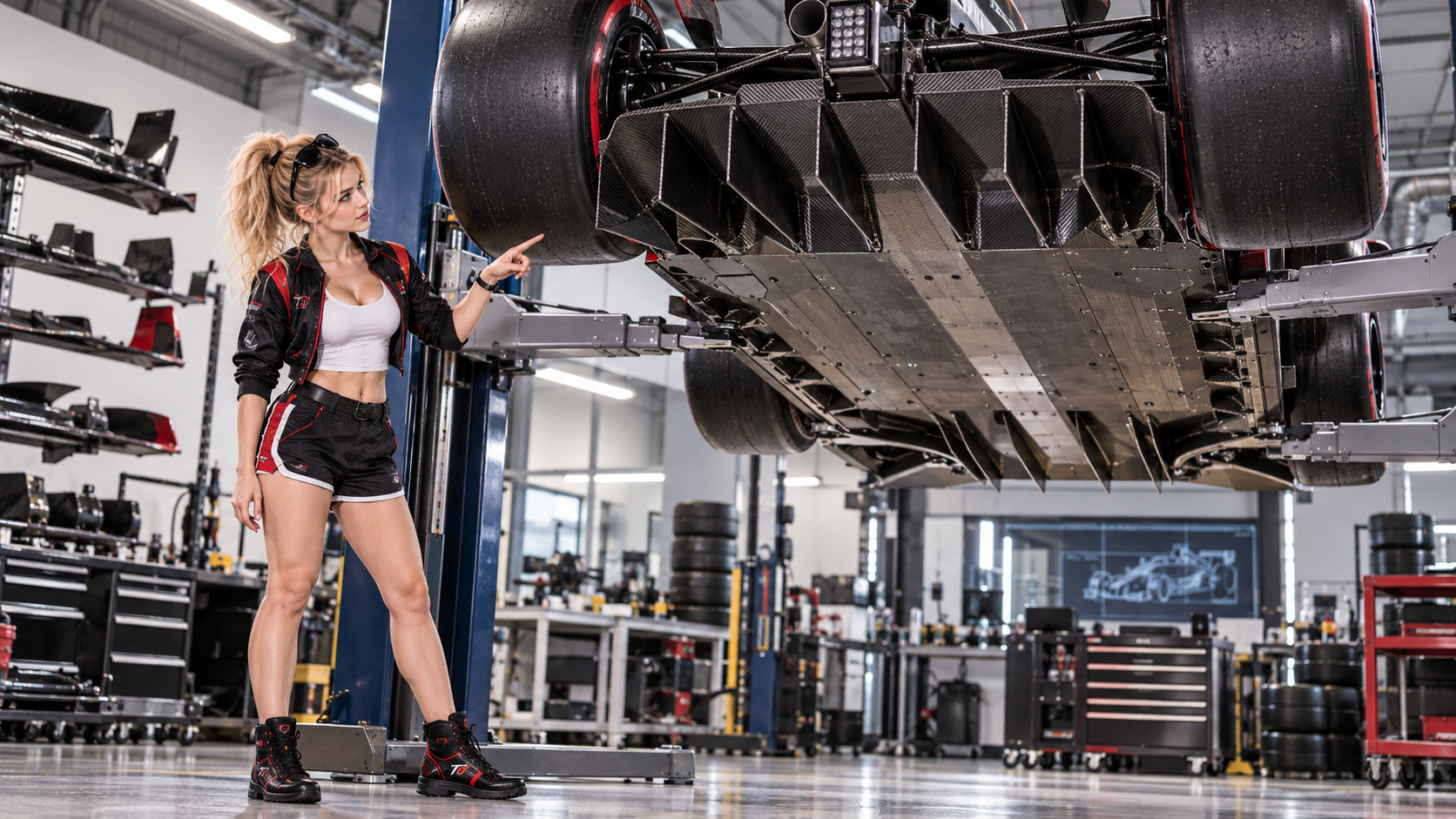
The underfloor works close to the track surface. Its shaped channels and tunnels manage how air accelerates beneath the car and how pressure is distributed across the floor. The pressure below can be lower than the pressure above, producing a net force toward the track. That is a more precise description than saying the floor simply “sucks” the car down.
The result depends on a narrow and moving operating window. Ground clearance, floor edges, wheel wake, tunnel shape and the diffuser at the rear all affect whether the intended flow remains attached and useful. The underside is a three-dimensional aerodynamic machine, not a flat board.
Venturi effect: useful, but don't oversimplify it
A shaped passage can accelerate flow through a restricted region and manage the pressure distribution around it. That is the helpful intuition behind talking about Venturi-like ground effect. But a Formula underfloor is not a simple textbook tube. Floor edges, vortical structures, pitch, yaw, ride height and disturbed upstream air all interact with the main flow.
That interaction is why an underfloor can be highly efficient in one attitude and unexpectedly sensitive in another. It also explains why teams spend so much time correlating wind-tunnel results, computational models and track data.
What does the diffuser do?
The diffuser is the expanding rear portion of the underfloor flow path. Its job is not simply to “make air slow down.” It helps the underfloor recover pressure while allowing the flow to leave the car in a controlled way. A well-managed pressure recovery lets the floor continue to operate effectively upstream.
If expansion is too aggressive for the available flow conditions, separation can occur and performance can fall away. The diffuser therefore has to be designed with the floor, rear bodywork, ride height and wake in mind. It is an exit to a system, not a standalone scoop.
Why ride height matters so much
The underfloor operates near the track, so small changes in ride height can change its flow field. Pitch, roll and heave matter too. Braking pitches the car forward; acceleration changes the attitude in the opposite direction; kerbs and bumps move the floor relative to the ground.
That creates a powerful connection between aerodynamics and suspension. The suspension isn't only controlling the tires. It is also controlling the aerodynamic platform. A setup that produces a spectacular peak in one static condition may be less useful if the car loses load when it heaves, rolls or meets a bump.
What does the front wing do?
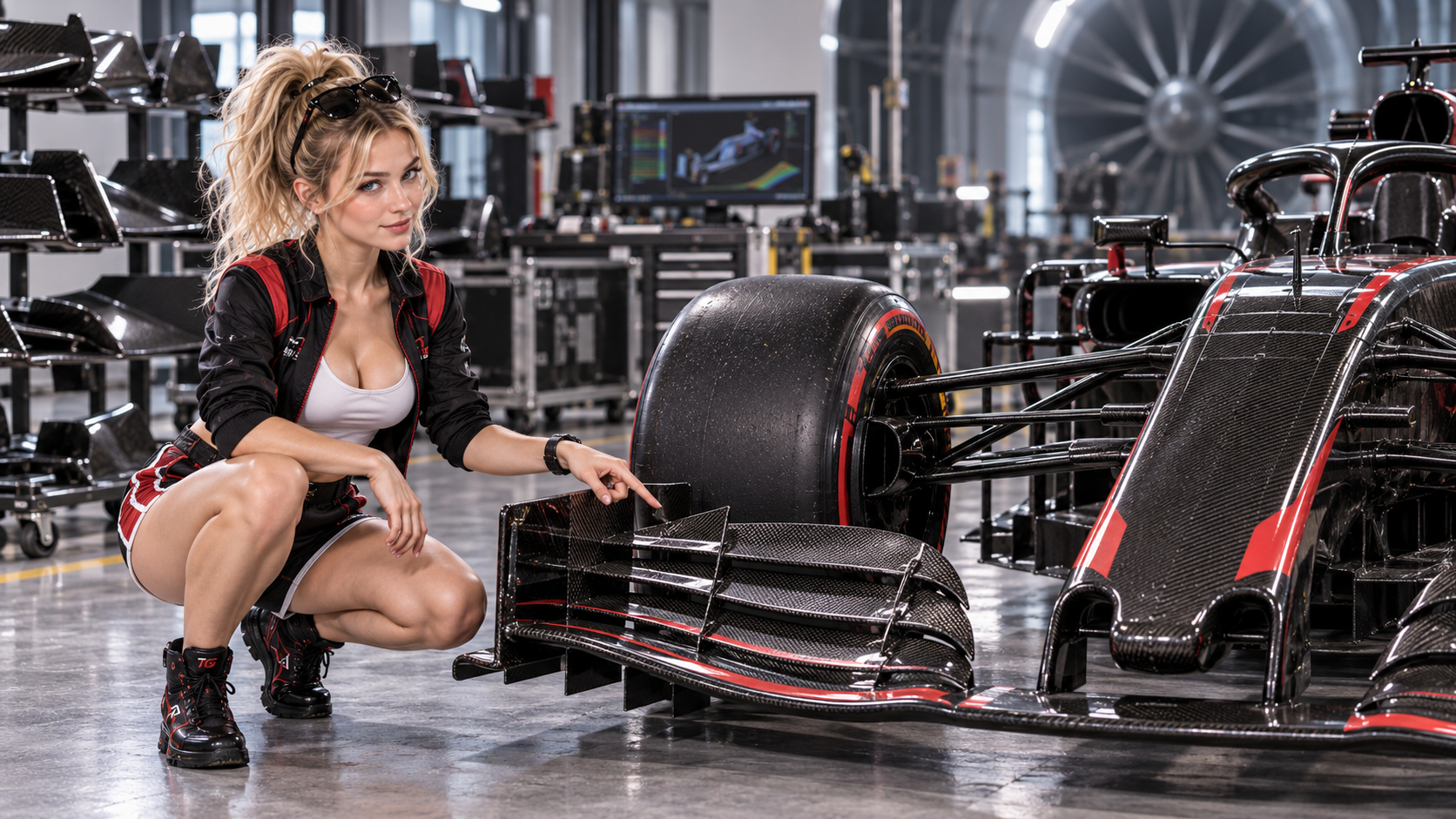
The front wing has at least two major jobs. It contributes aerodynamic load at the front axle, and it conditions the airflow approaching the bodywork, front tires and floor. Its multiple elements create pressure differences and turn the flow. The goal is not automatically maximum front downforce; the goal is a useful front balance that feeds the rest of the car.
Why the front tires are an aero problem
Open wheels disturb airflow significantly. A rotating tire produces a complex wake, and the suspension and steering angle change the geometry that the air sees. The rest of the car must manage that disturbed air so it does not ruin the floor or destabilize the rear of the car.
This is another reason front-wing design is about flow management as well as local load. A front wing that looks impressive in isolation can be the wrong answer if the wake it creates makes the complete package less stable.
What about the rear wing?
The rear wing contributes rear aerodynamic load, affects balance and creates drag. It also interacts with the wake leaving the bodywork and diffuser. A larger or more aggressive wing can add useful load in a corner, but it can also cost straight-line speed and increase the demand on the rest of the package.
Rear-wing configuration is therefore a system decision. The right answer changes with the circuit, tire behavior, cooling needs and how the floor is operating.
Downforce versus drag
Downforce is useful in corners. Drag opposes forward motion and affects acceleration and top speed. Engineers therefore trade downforce against drag while also asking how efficiently the car produces load. A useful conceptual measure is downforce generated relative to the drag cost—not a single magic number, but an efficiency question.
Maximum downforce is not automatically optimal. Straight-line speed, circuit layout, balance, tire behavior, cooling, ride-height sensitivity, stability and the setup window all matter. The objective is performance over the lap, not the largest downforce number in isolation.
Monaco versus Monza: different problems
A circuit dominated by slower corners rewards a different compromise from one with long, high-speed straights. More aerodynamic load may be worth more drag in one setting; lower drag may be the better lap-time trade in another. The exact setup depends on the car and conditions, but the principle is stable: different tracks change the optimum compromise.
Aerodynamic balance
Engineers care not only about total downforce but where it acts. More front load relative to the rear can change turn-in and mid-corner behavior. More rear load can increase stability while changing how readily the car rotates. If the balance moves with speed, ride height or steering angle, the driver feels that as a car whose personality changes through the corner.
What happens when the air gets dirty?
A following car does not receive the same clean, undisturbed air as the leading car. Wake turbulence and the altered pressure and velocity field can change how its wings and floor work. That can reduce confidence and make the car harder to place, especially when it is already close to a rival.
The precise effect depends on the cars, regulations, track position and operating condition. The general lesson is enough here: aerodynamic performance is shaped by the air around the car, not only by the car's own geometry.
Downforce is not free grip
Every aerodynamic gain brings costs or sensitivities: drag, structural load, cooling compromises, setup complexity, ride-height sensitivity and a narrower operating window. The tires still have to convert the extra load into force, and the driver still has to manage a car whose balance may change with speed.
Quick recap
Creates front aero load and helps manage downstream airflow.
Uses the underside and proximity to the track to generate substantial aerodynamic load.
Helps manage expansion and pressure recovery of underfloor airflow.
Contributes rear aerodynamic load and balance, with a drag cost.
Controls the car's attitude and therefore the aerodynamic platform.
Convert aerodynamic load into useful performance within their real nonlinear behavior.
Final thoughts
The remarkable thing about Formula 1 aerodynamics isn't any single wing. Nearly every surface influences the air, and every aerodynamic decision affects something else. That is why the fastest solution isn't simply more wing.
It is a better aerodynamic system: one that creates useful load, carries it through the car's operating range, and pays an acceptable drag and complexity cost to do it.
For another look at how racing engineering turns airflow and combustion into speed, read How a NASCAR V8 Engine Works or compare forced-induction energy paths in Turbocharger vs Supercharger.